I Don't Love You Anymore by Rithvik Singh: Is the Viral Book Worth the Hype?
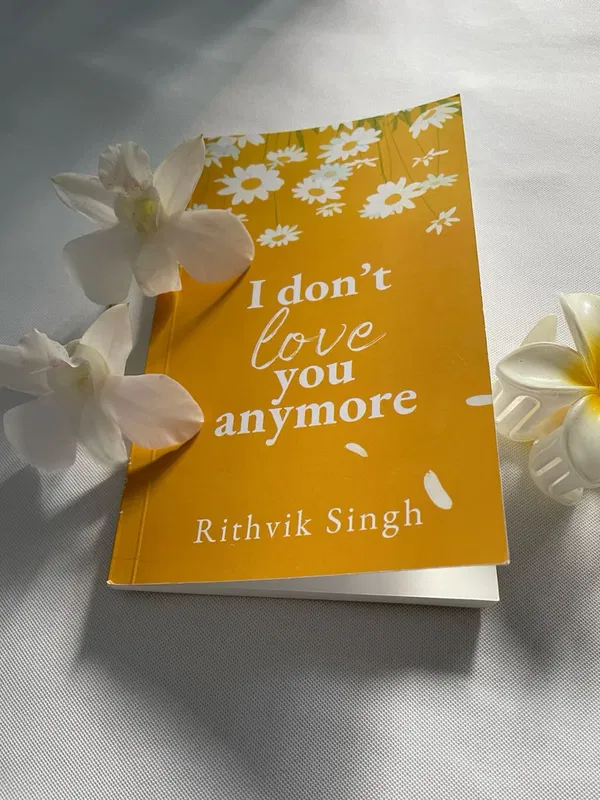
In recent years, emotionally driven literature centred on heartbreak, healing, and romantic disillusionment has gained remarkable popularity on social media platforms. One such book that has attracted significant attention online is I Don't Love You Anymore by Rithvik Singh. Influenced by the widespread trend and the enthusiastic discussions surrounding the book, I decided to purchase and read it with the expectation of encountering a thoughtful exploration of love, loss, and emotional recovery.
At its core, the book appears to aim at readers who are deeply emotional and perhaps navigating the complicated aftermath of heartbreak. The title itself suggests an intimate journey through the painful process of letting go of someone once loved. However, upon reading the book, it quickly becomes apparent that it does not follow a conventional narrative structure. Instead, the work is composed largely of brief reflections and standalone quotes that revolve around themes of love, longing, separation, and emotional vulnerability.
One example from the book captures the reflective tone that the author attempts to establish:
“Some people are like songs in your head. You miss them like you hum that song—unknowingly but constantly. You don't remember the lyrics, and you don't know them well either. All you know is that you cannot get them out of your head.”
This quote reflects the central motif of lingering memories and emotional attachment. It illustrates how certain people remain present in our minds even after they are gone, much like a melody that refuses to fade. The metaphor is evocative and relatable on the surface, and it demonstrates the author’s attempt to articulate the subtle persistence of emotional memories.
Despite such moments, my overall reading experience was somewhat disappointing. While the book contains numerous reflections on love and heartbreak, many of them appear disconnected from one another. Rather than forming a coherent emotional journey, the book often feels like a compilation of random quotations loosely tied to the theme of romantic pain. As a result, the work does not fully justify the powerful and intriguing title it carries. One might expect a deeper exploration of emotional healing or personal growth, yet the book rarely moves beyond brief expressions of melancholy and longing.
Another quote from the book states:
“Sometimes, you need to remind yourself that your heart doesn't deserve to ache this much. You need to remind yourself that pain isn't the currency for ensuring someone continues to love you.”
This line attempts to introduce a message of self-worth and emotional boundaries, suggesting that love should not require constant suffering. Although the sentiment is meaningful, it remains somewhat surface-level and lacks the depth or contextual development that might make it more impactful for readers seeking genuine guidance or emotional insight.
One possible explanation for the book’s popularity lies in its appeal to a younger audience, particularly readers from the Gen Z demographic who frequently engage with short, emotionally expressive content on social media. The style of writing resembles the format of captions or shareable quotes often seen on platforms like Instagram. In that sense, the book may resonate with readers who prefer concise, easily digestible reflections on relationships and emotions.
However, for more mature readers who expect deeper narrative engagement, character development, or a structured exploration of emotional healing, the book may feel underwhelming. Rather than guiding readers through the complexities of heartbreak or offering meaningful perspectives on moving forward, it largely remains within the realm of sentimental statements.
In conclusion, I Don’t Love You Anymore presents itself as a heartfelt exploration of love and loss but ultimately reads more like a collection of loosely connected reflections. While some quotes are thoughtful and aesthetically appealing, the overall work lacks cohesion and depth. The book’s popularity on social media may reflect current reading trends among younger audiences, yet from a critical perspective it does not entirely live up to the hype surrounding it. For readers seeking a profound literary examination of heartbreak and emotional growth, the book may feel somewhat superficial. Nevertheless, those who enjoy short, emotionally expressive quotations may still find moments within it that resonate with their personal experiences.
Comments
No comments yet. Be the first to comment!